






_category-thumb.webp "Solvents")
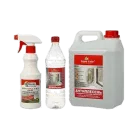
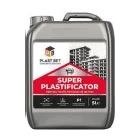














As is well known, concrete requires special attention and care during the winter and cold seasons. Even at positive temperatures, it is necessary to use an anti-freeze plasticizer.
The “Anti-Freeze” Plasticizer (-10°C) is a special additive that enables concreting at low temperatures.
It often happens that concreting is done during the day at temperatures from +5°C to +10°C, but freezing may occur at night. This creates a risk of concrete freezing. During such times, the hardening process slows down significantly, and the concrete may not gain the required strength. Water remaining in the mix turns into ice crystals, which damage the concrete.
By using the special Plast Bet brand “Anti-Freeze” plasticizer, the concrete hardening process accelerates (by 30–100%, depending on temperature), making freezing impossible. A key advantage of this product is the reduction of water demand by up to 10% and the added plasticizing effect.
Important: When used below 0°C, the concrete must be maintained at over +10°C until it reaches 40% of the design strength (up to 3 days). Concrete laid and exposed outdoors must be protected against heat loss using insulation mats, foil, tents, or heating. At lower temperatures, hot air, steam, or electric heating must be applied.
In warm seasons, using the “Anti-Freeze” plasticizer significantly accelerates concrete hardening! It is recommended when fast strength development is needed, such as for quick formwork turnover.
Basic rules for winter concreting:
-
Minimum cement content: 270–300 kg/m³ (depending on cement type)
-
Use fast-setting cements: PC 1500, PC 1400, PC 11/A-Ș-400
-
Store all concrete components in warm areas (do not use frozen aggregates)
-
Heat mixing water to 70–80°C; mix temperature should reach up to +30°C
-
Before placing, clean forms, formwork, and reinforcement of snow and ice
Note: The “Anti-Freeze” plasticizer is not a traditional antifreeze. It is a blend of salts and plasticizing lignins that work only in combination with cement to accelerate setting and reduce water demand. This does not mean the liquid itself won’t freeze—its role is not to resist freezing physically. It remains usable at down to -8°C or -10°C for short periods due to its chemical composition.
Link 1: Anti-Freeze Plasticizer (-10°C)
Link 2: Plasticizer for Insulation Systems